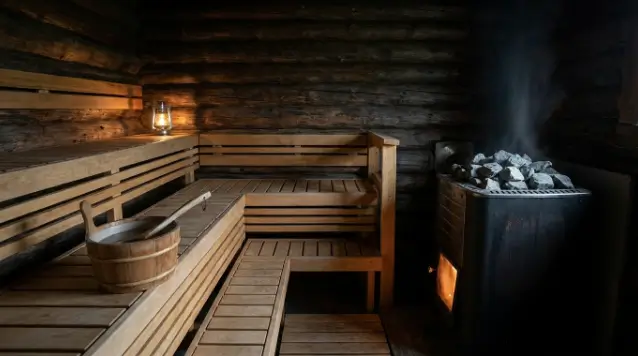
On a budget, the decisions that matter most are prefab versus custom construction, electric versus wood-fired heat, and wood species, in roughly that order of cost impact. A prefab kit with an electric heater and basic wiring typically lands between $4,500 and $8,500 installed for a two to four person unit, while a custom build or a wood-fired setup can push well past $10,000 once site work is included. Buyers who compare only the sticker price on the cabin itself, without pricing the heater and electrical work separately, are the ones most likely to blow a budget mid-project.
Prefab Kit or Custom Build: Which Costs Less by the Time It’s Installed?
A prefab kit arrives pre-cut and numbered, with panels that bolt or slide together in a weekend, which keeps labor cost low even if a buyer hires help for the final assembly. A two to four person kit generally runs $3,000 to $6,500 before the heater, electrical hookup, and any pad or foundation work. A custom-built cabin, framed and finished on site by a carpenter, starts closer to $9,000 for a similar footprint once labor is priced at a normal hourly rate, and can climb quickly with any custom bench layout or window configuration. For a strict 2026 budget, a quality prefab kit from an established maker is almost always the more predictable number, since the manufacturer has already solved the fit and wood-movement problems a first-time custom builder tends to discover the hard way.
Electric or Wood-Fired Heat: Where the Real Costs Hide
Electric heaters look more expensive on paper, often $600 to $1,800 for a unit sized correctly to the cabin, against $400 to $900 for a comparable wood-burning stove. That comparison flips once installation enters the picture. A wood-fired heater needs a code-compliant chimney or flue, a non-combustible hearth pad, and larger clearance to any wall or bench, all of which add real material and permitting cost. An electric heater needs a dedicated 240-volt circuit, which is its own expense but is usually smaller than a full chimney installation unless the electrical panel is unusually far from the cabin. For most budget-conscious buyers building in a yard rather than off-grid, electric ends up being the cheaper total once every line item is counted, not just the heater price tag.
Cedar, Spruce, or Heat-Treated Hemlock: Where the Savings Actually Are
Western red cedar is the wood most people picture, and it commands the highest price per board foot of the common options, largely for its natural rot resistance, light weight, and aroma. Nordic spruce runs a step below cedar in cost and performs nearly as well structurally, though it lacks cedar’s natural oils. Thermally modified, or heat-treated, hemlock is the budget standout: the kiln process changes the wood’s cell structure to resist rot and warping close to cedar’s level, at a noticeably lower material cost, with the tradeoffs being less aroma and a wood that is slightly more brittle to cut and drill during assembly. For a buyer trying to hit a firm number, choosing heat-treated hemlock over cedar is often the single biggest lever available without touching heater type or size.
Indoor Alcove or Freestanding Outdoor Cabin?
An indoor build, tucked into a basement corner or a converted closet, skips the foundation and weatherproofing cost of an outdoor unit, but usually needs a vapor barrier, ventilation fan, and sometimes a floor drain added to an existing room, which is its own expense. A freestanding outdoor cabin needs a level gravel or concrete pad, but avoids most of the moisture-control work an indoor build requires, since the structure is already built to shed water. Neither option is categorically cheaper. The deciding factor is usually whether the indoor space already has the electrical capacity and moisture control a sauna needs, or whether that work would need to be added from scratch either way. Buyers who already have a partially finished basement with a nearby drain and reasonable ceiling height tend to come out ahead going indoors, while anyone starting from an unfinished garage or a bare yard usually finds the outdoor route simpler to price and permit.
See also: Tips for Private Label Kids Shoes
What a Realistic 2026 Budget Actually Covers
A workable starting number for a two to four person electric kit, delivered and installed with a new dedicated circuit, is $6,000 to $9,500 depending on region and how far the electrical run is from the panel. That figure assumes a level site already exists and does not include tree removal, deck reinforcement, or a permit if the local jurisdiction requires one for outdoor electrical structures. Before ordering anything, it is worth pricing the heater and wood specs against at least two sellers rather than one. Specialty retailers such as Sweat Decks list wood species, kilowatt rating, and included electrical components by model, which makes it possible to compare real installed cost rather than just the cabin’s advertised price.
Does Regular Use Actually Justify the Spend?
Cost aside, the case for buying at all rests on how often the cabin actually gets used, and the research on that point is fairly consistent. A large Finnish cohort study found men who used a sauna four to seven times weekly had lower rates of fatal cardiovascular events and all-cause mortality than men who used one once a week, an association that held after adjusting for other risk factors. A 2018 review in Mayo Clinic Proceedings summarized similar cardiovascular associations across a range of studies. These are population-level associations, not a guarantee for any one household, but they support the basic logic that a cabin bought within budget and actually used several times a week delivers more value than a more expensive one that sits idle because it was never sized or sited correctly.
Frequently Asked Questions
Is a prefab kit or a custom-built sauna cheaper? A prefab kit is almost always cheaper once labor is counted. A two to four person kit typically runs $3,000 to $6,500 before electrical work, while a comparable custom build often starts near $9,000.
Does a wood-fired heater save money over electric? Not usually, once chimney, hearth pad, and clearance requirements are priced in, even though the wood-fired heater unit itself is often cheaper than an electric model.
Is heat-treated hemlock a good budget alternative to cedar? Yes, for most buyers. It costs less per board foot, resists rot and warping well once properly kiln-treated, and gives up mainly aroma and a bit of weight compared with cedar.
What’s the biggest hidden cost buyers miss in 2026? Electrical work. Heaters above 6 kilowatts typically need a dedicated 240-volt circuit, and that run is frequently the largest cost outside the sauna itself.
References
- Association between sauna bathing and fatal cardiovascular and all-cause mortality events, JAMA Internal Medicine, 2015
- Cardiovascular and Other Health Benefits of Sauna Bathing: A Review of the Evidence, Mayo Clinic Proceedings, 2018
- Joint associations of sauna bathing and cardiorespiratory fitness on cardiovascular and all-cause mortality risk, Annals of Medicine, 2018
By Tom Whitfield